We Will Never Die
March 2026
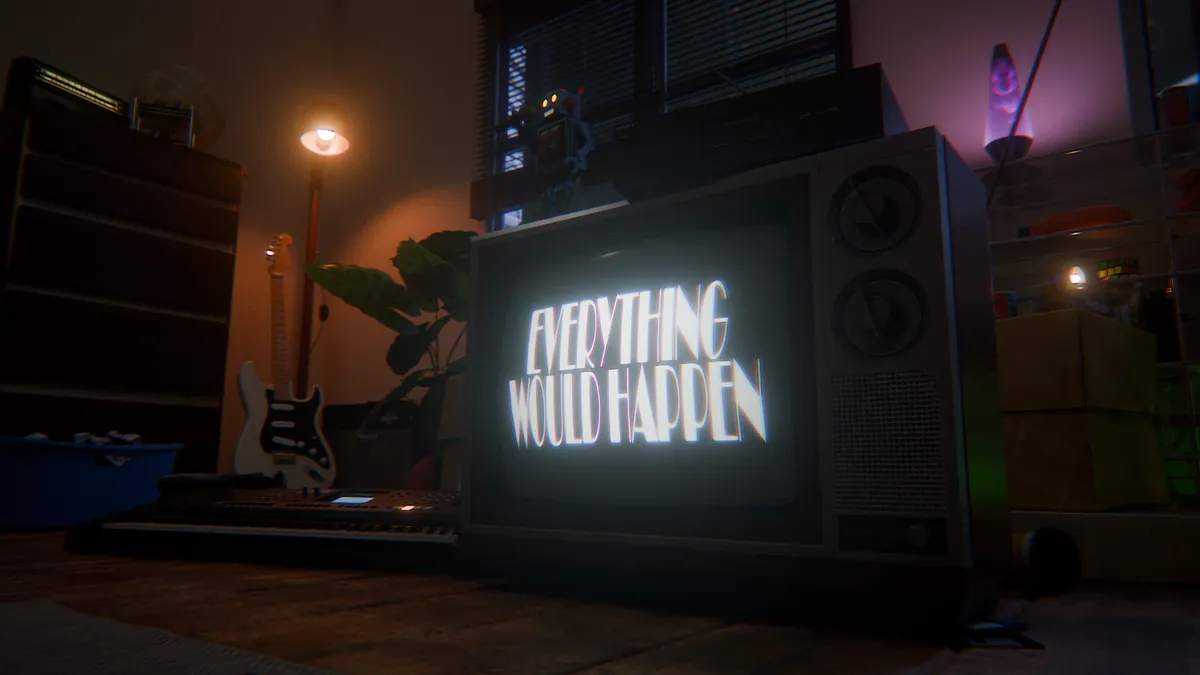
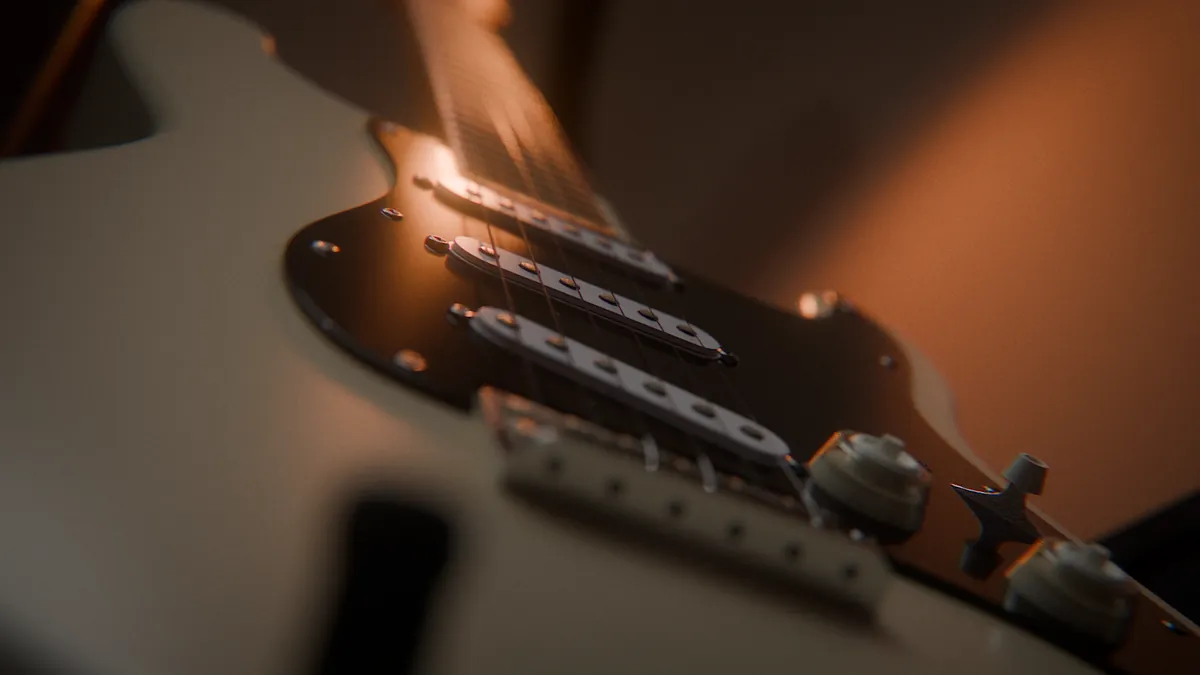
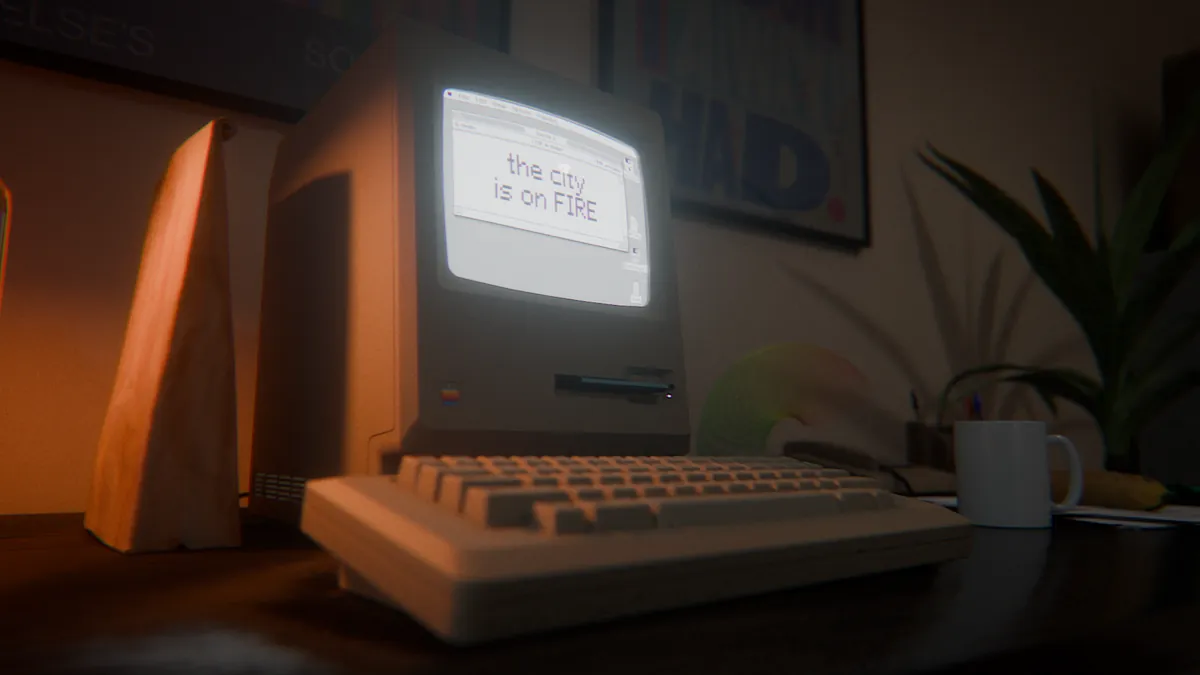
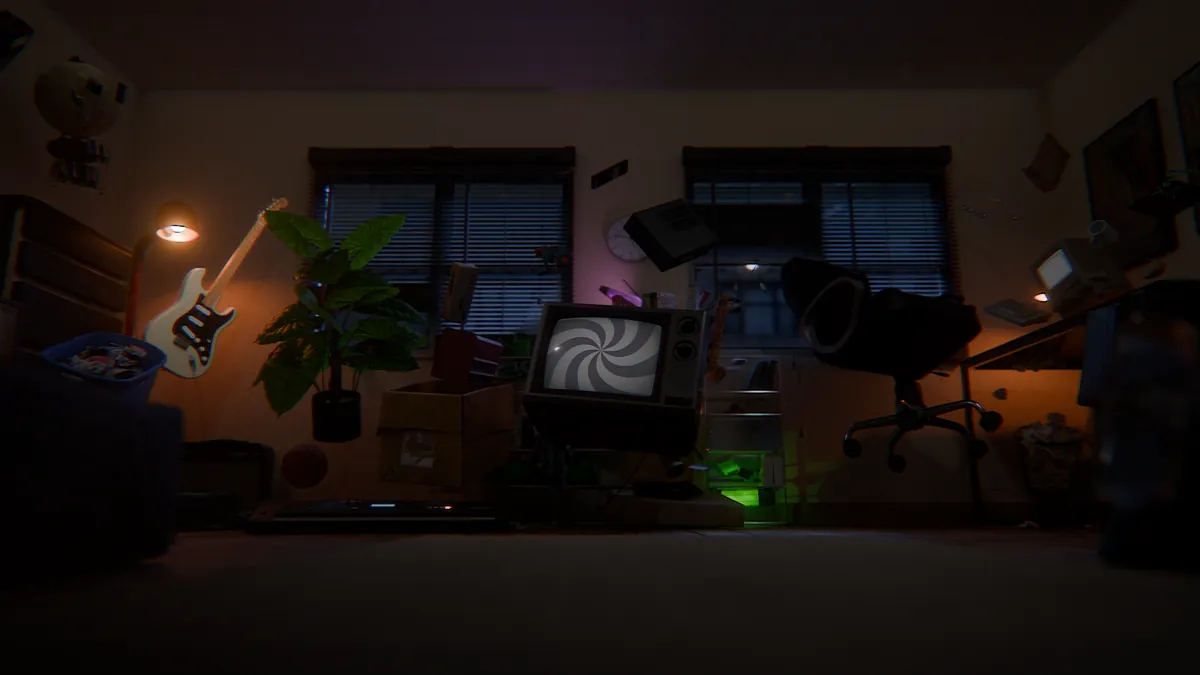
"We Will Never Die" is a music video I made for my Bachelor's thesis, built to show off my Blender add-on, Better Audio Tools (BAT). Where my other thesis piece, Resonance, is a general visualiser for any song, this one is fitted to a single track by Päg Hagström. Much of the camera work and prop animation follows its rhythm.
Art Direction
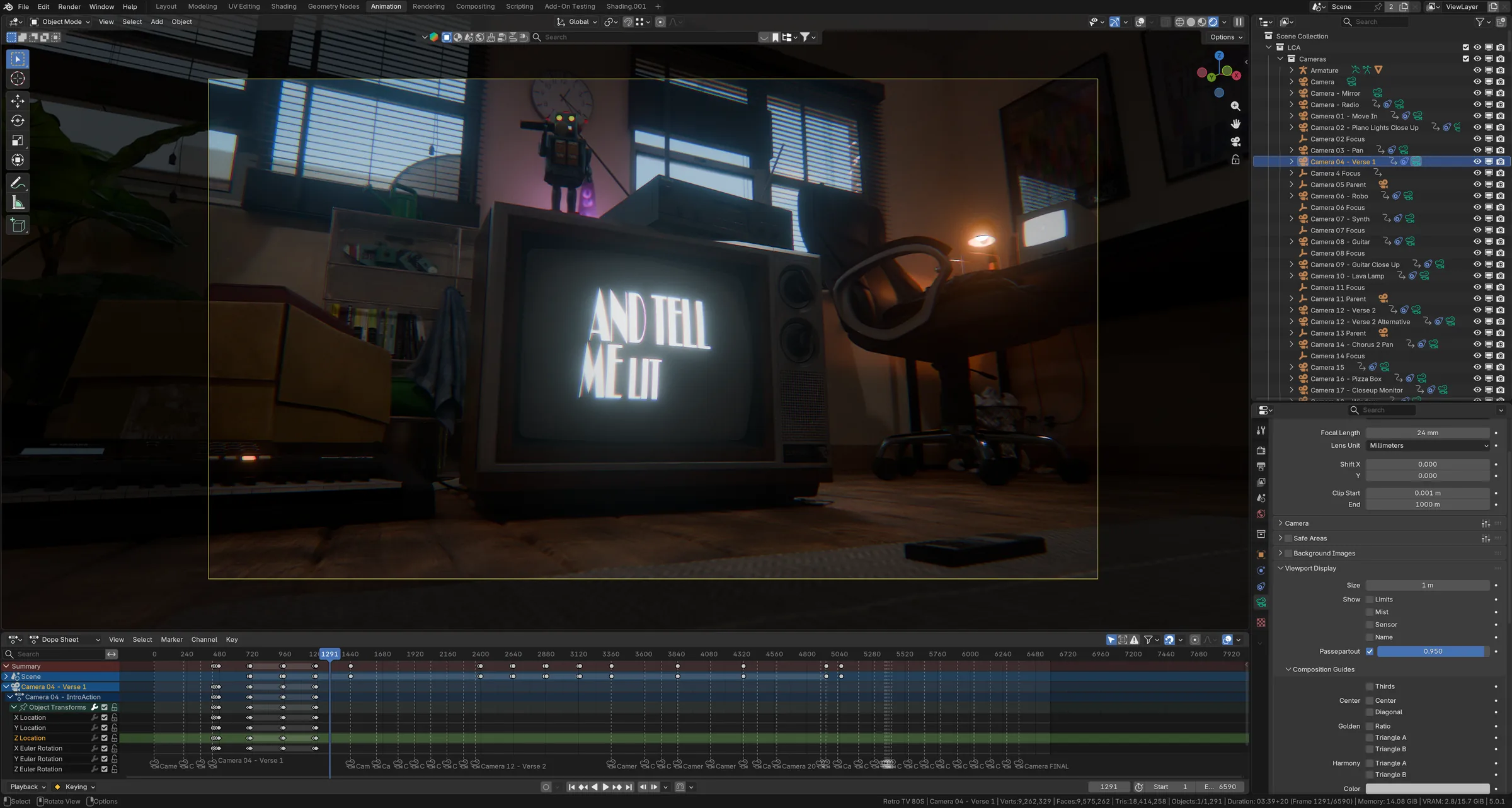
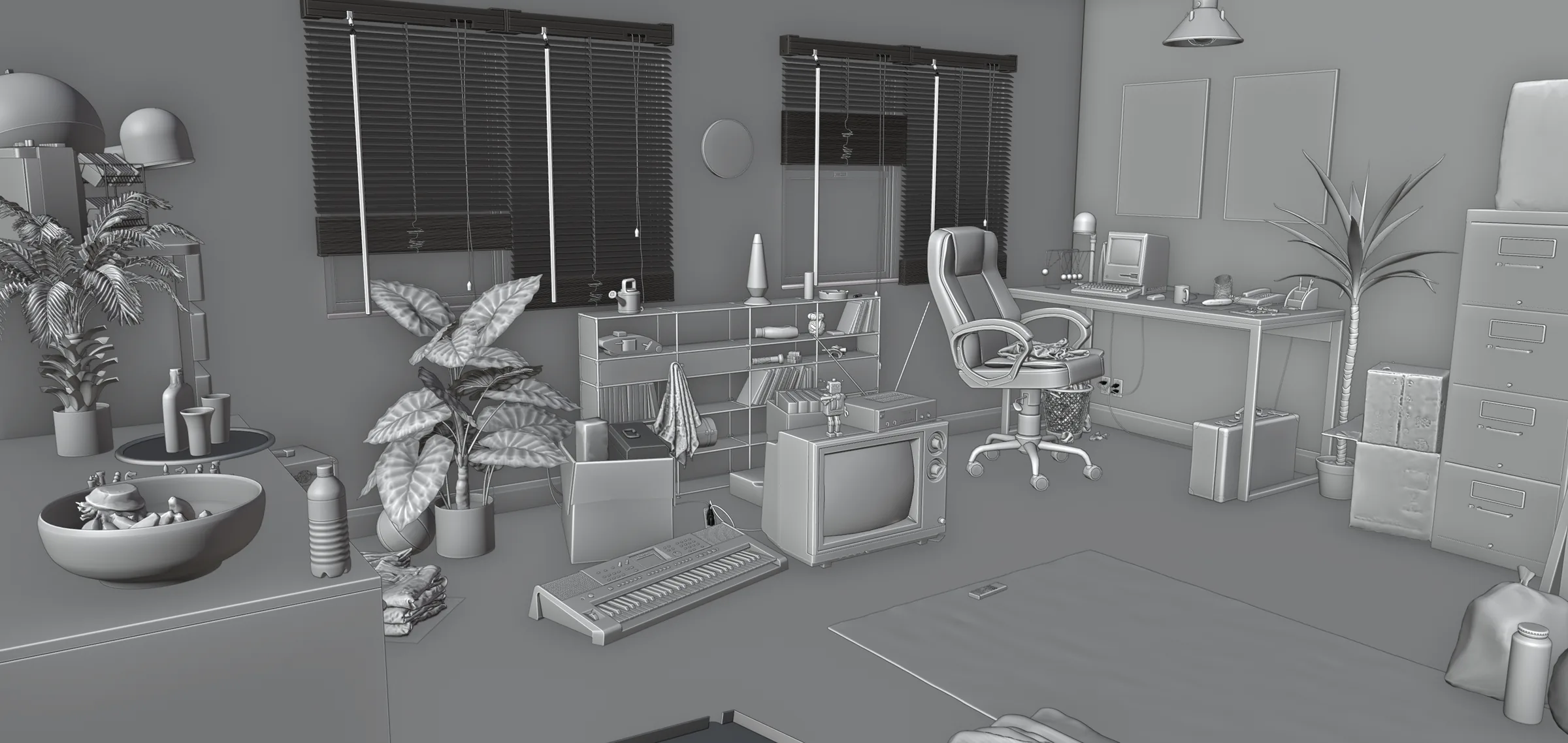
The whole video lives in one 80s/90s dorm room, staged like a physical memory and filled with era-typical props: a Macintosh, a CRT TV, a synthesiser, an old toy robot. A subtle grade with grain and colour fringing makes it read like aged camera footage, warm and worn rather than clean and digital.
Better Audio Tools
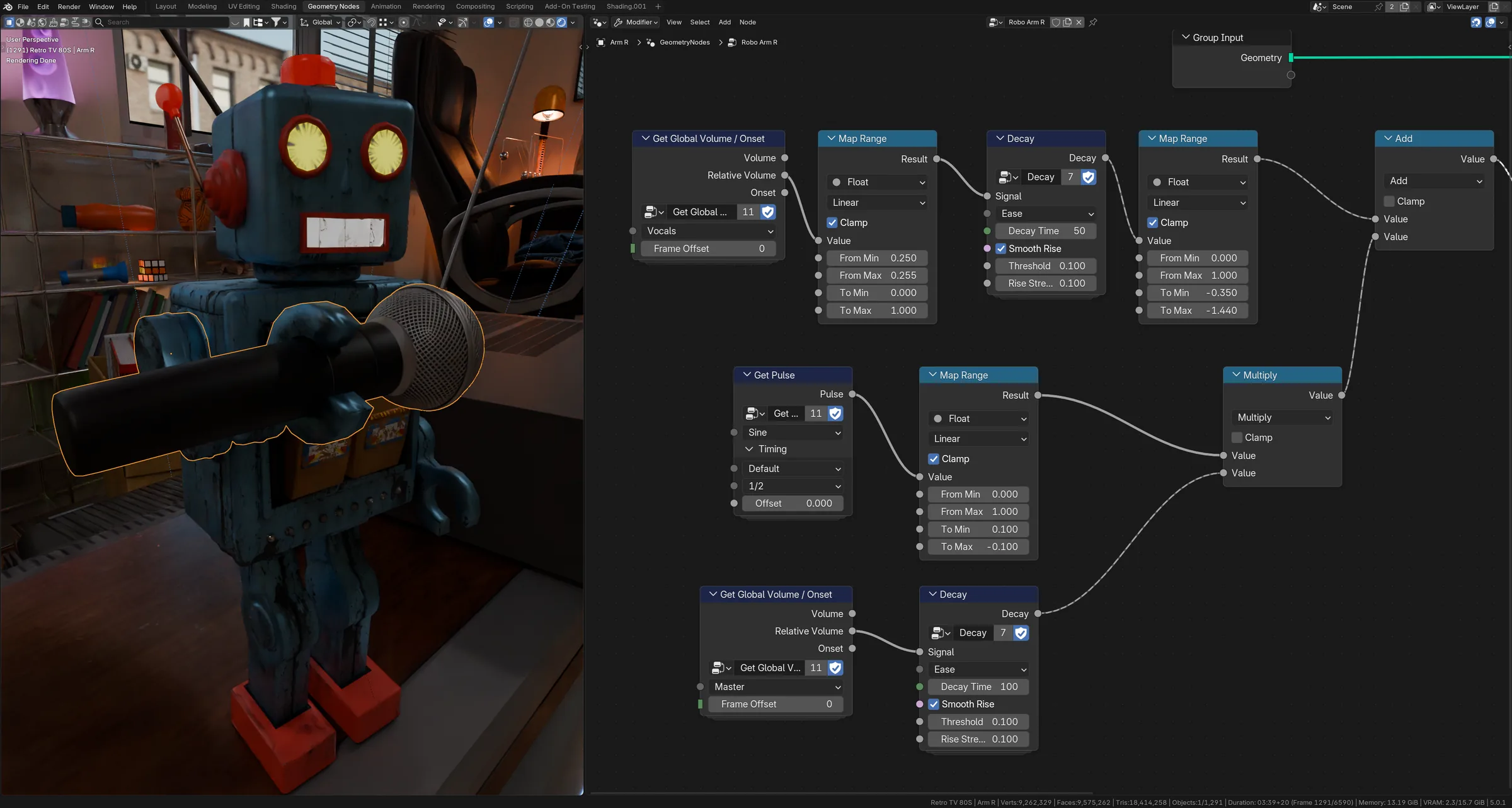
The video runs on Better Audio Tools, an add-on I developed that brings audio analysis into Blender so a song can drive animation and shading directly. I created it largely with Gemini, as an experiment in how far AI can help an artist write their own tools. The add-on runs locally and splits a track into stems (vocals, instruments, bass and drums), each of which becomes an animation source.
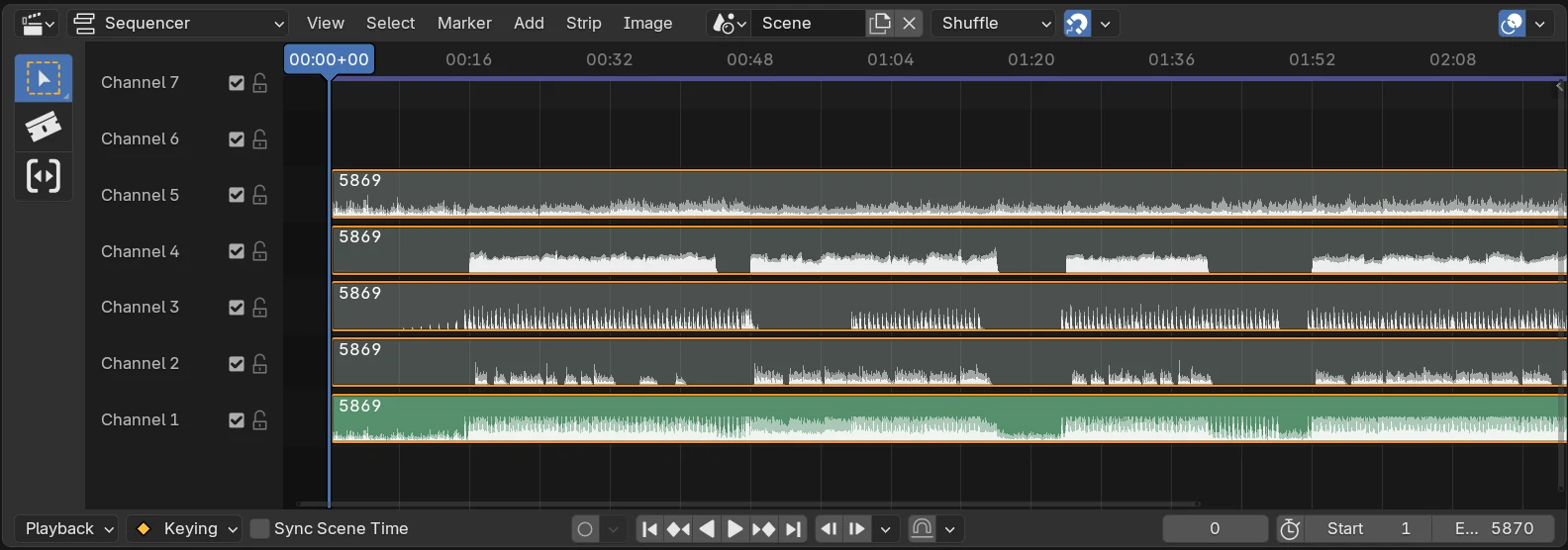
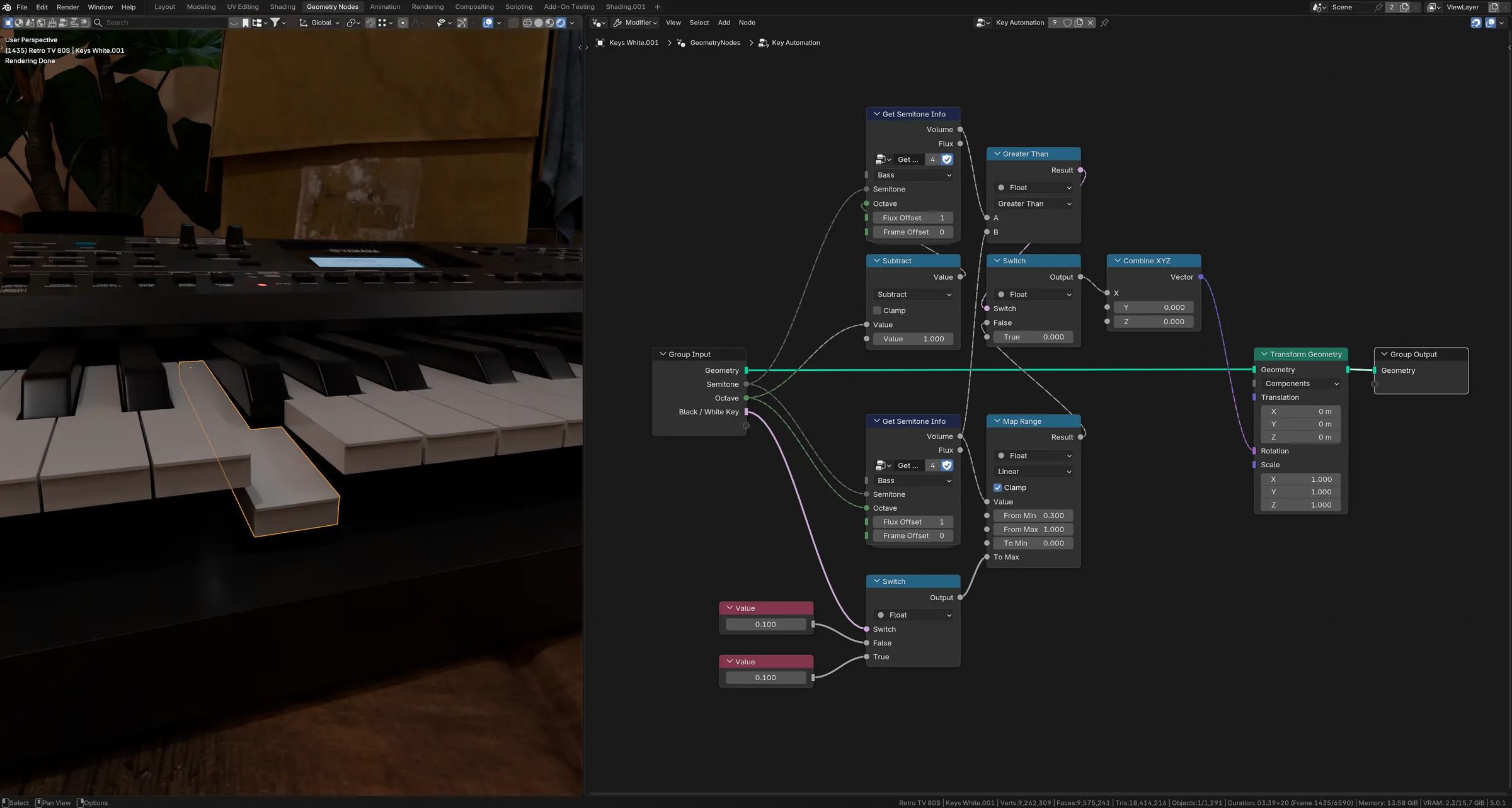
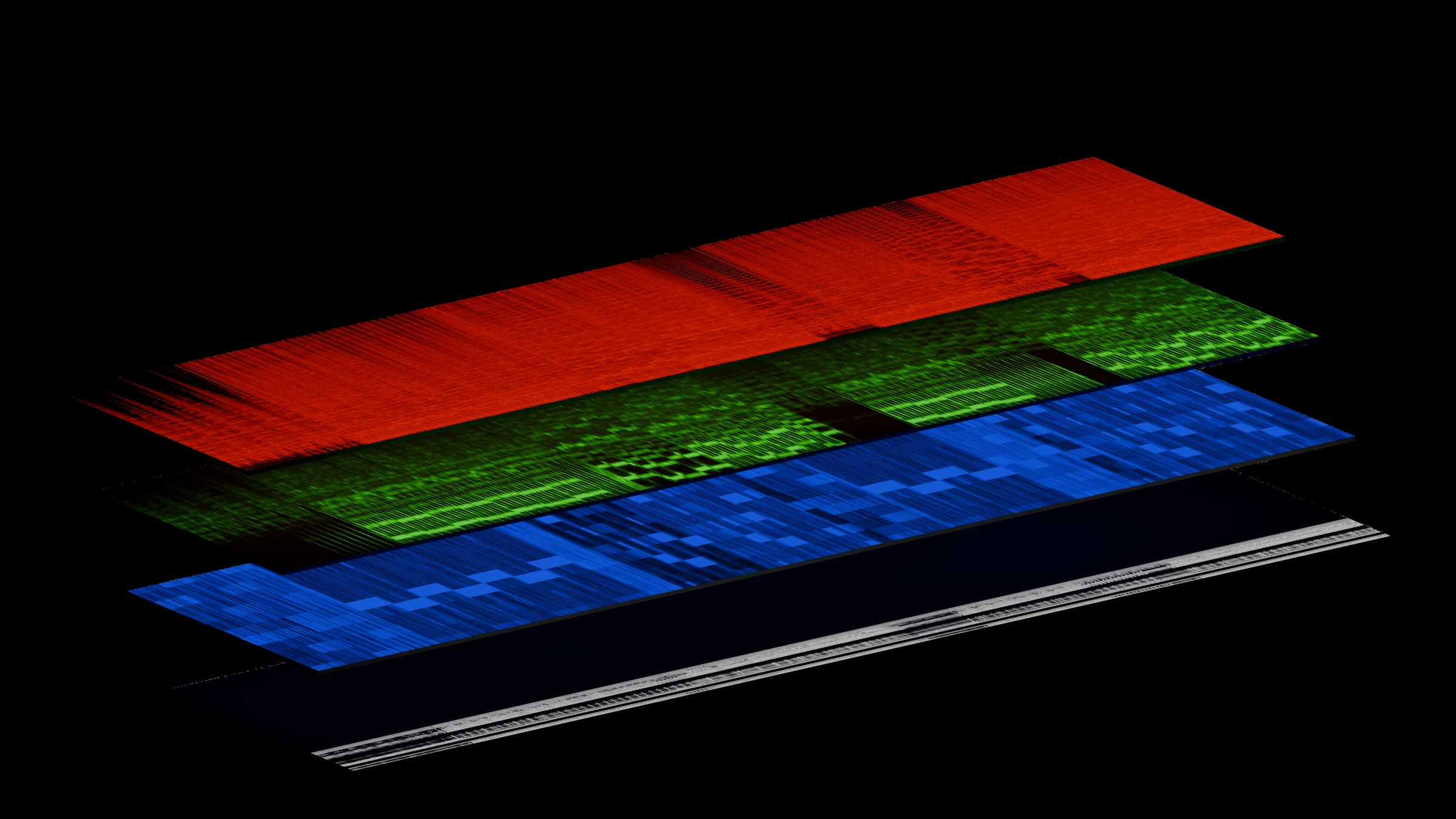
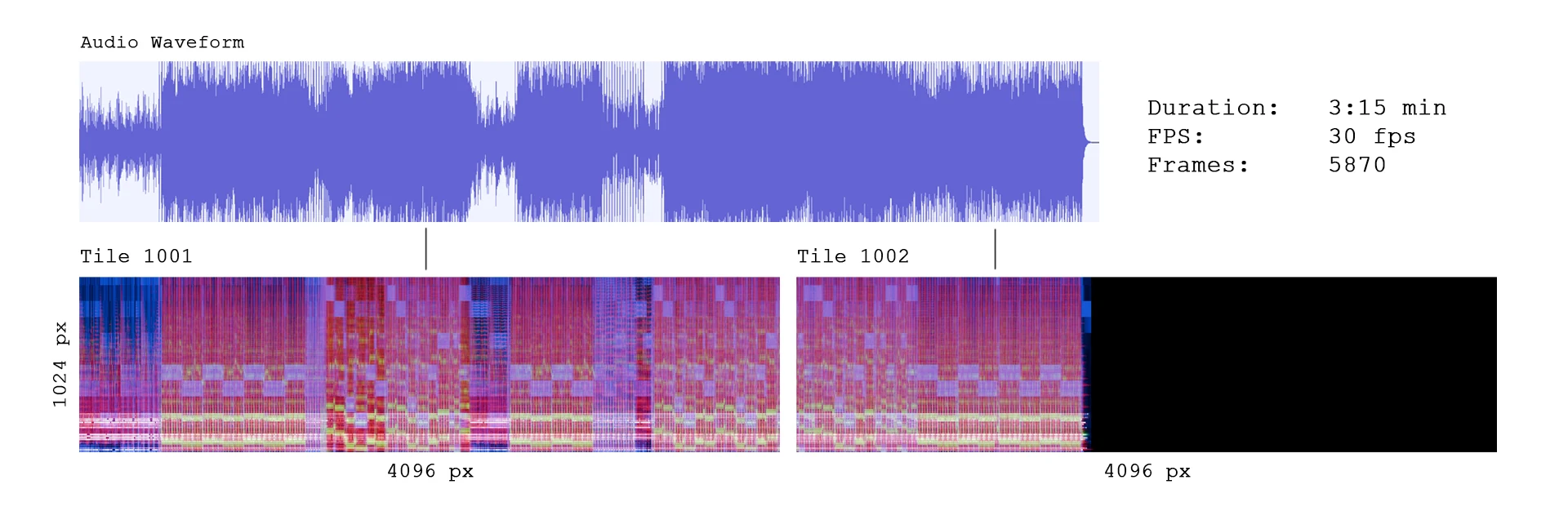
Under the hood, BAT runs the separation with the HT Demucs model and lays the stems out next to the full mix as tracks in Blender's Video Sequence Editor. Because Blender's node editors can't read audio, each stem's analysis is packed into a 32-bit image texture: the colour channels hold spectral data, the alpha channel stacks one-dimensional features such as loudness, and every pixel column is one frame of the song. Long songs continue across UDIM tiles of up to 4,096 pixels, so the texture never exceeds Blender's size limit, and custom decoder node groups read the data back in both Geometry Nodes and the Shader Editor.
Animation
Almost everything that moves is driven by those stems. The toy robot raises its mic as the vocals come in, the synth keys follow the bassline, the guitar strings ring on their notes, and the camera rides a rhythmic sway on top of the hand-animated moves.