Throwaways - A Wall·E Fan Film
March 2025
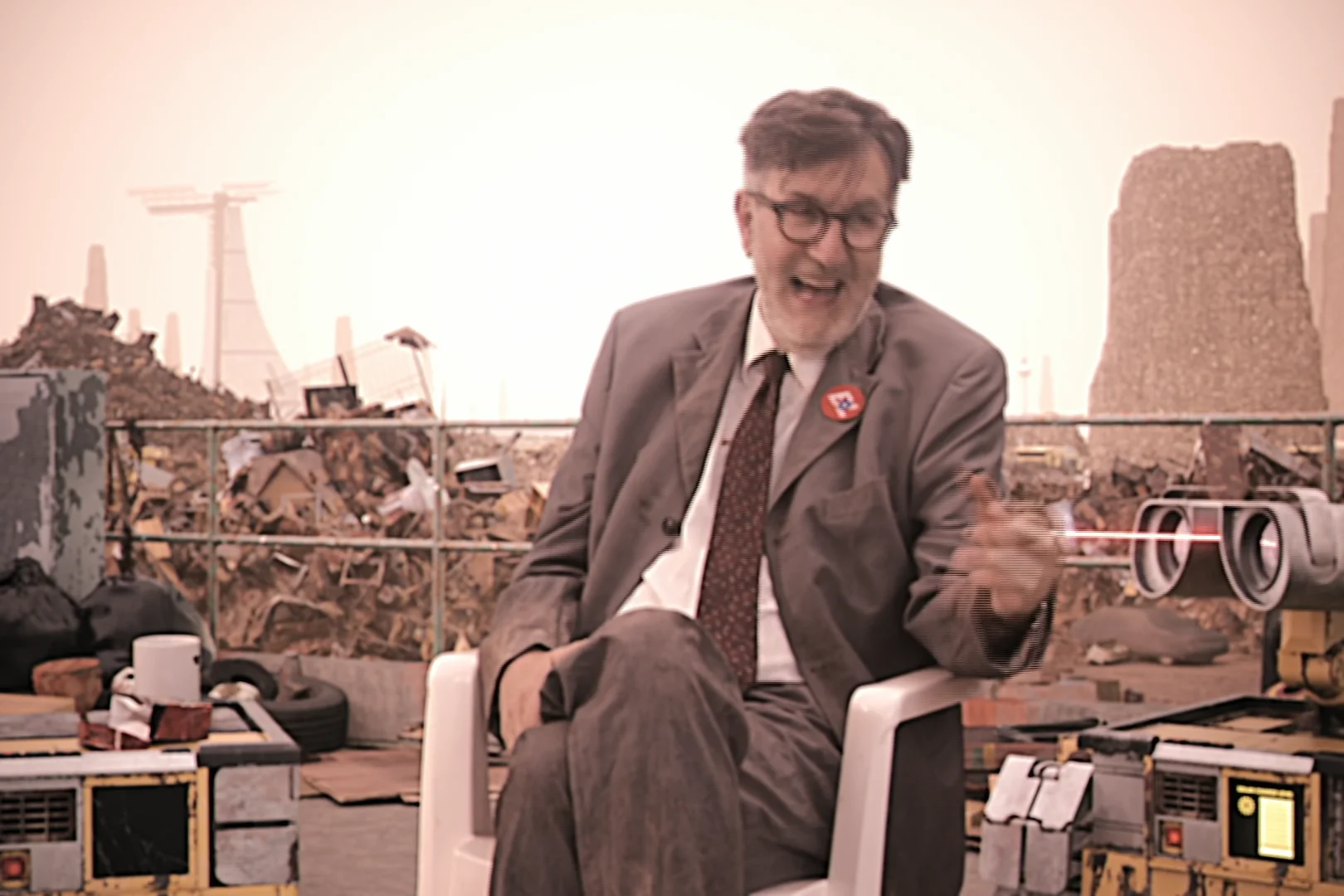
Throwaways is a post-apocalyptic comedy short set in the Wall·E universe, told from the human side rather than the robots'. Its small cast never made it aboard the Axiom starliner, and they've been scraping by on the abandoned Earth ever since, living alongside the Wall·E units and filming their survival in mockumentary style.
It grew out of a shared love for the original. Wall·E has been my favourite film since childhood, and I'd wanted to bring the character into live action for years. We made it in our sixth semester with a team of five, three of whom also acted, plus three more actors, and at about nine and a half minutes it was the longest piece any of us had worked on in our degree programme. Besides co-writing it, I storyboarded the whole film and did the full edit and sound design.
Art Direction
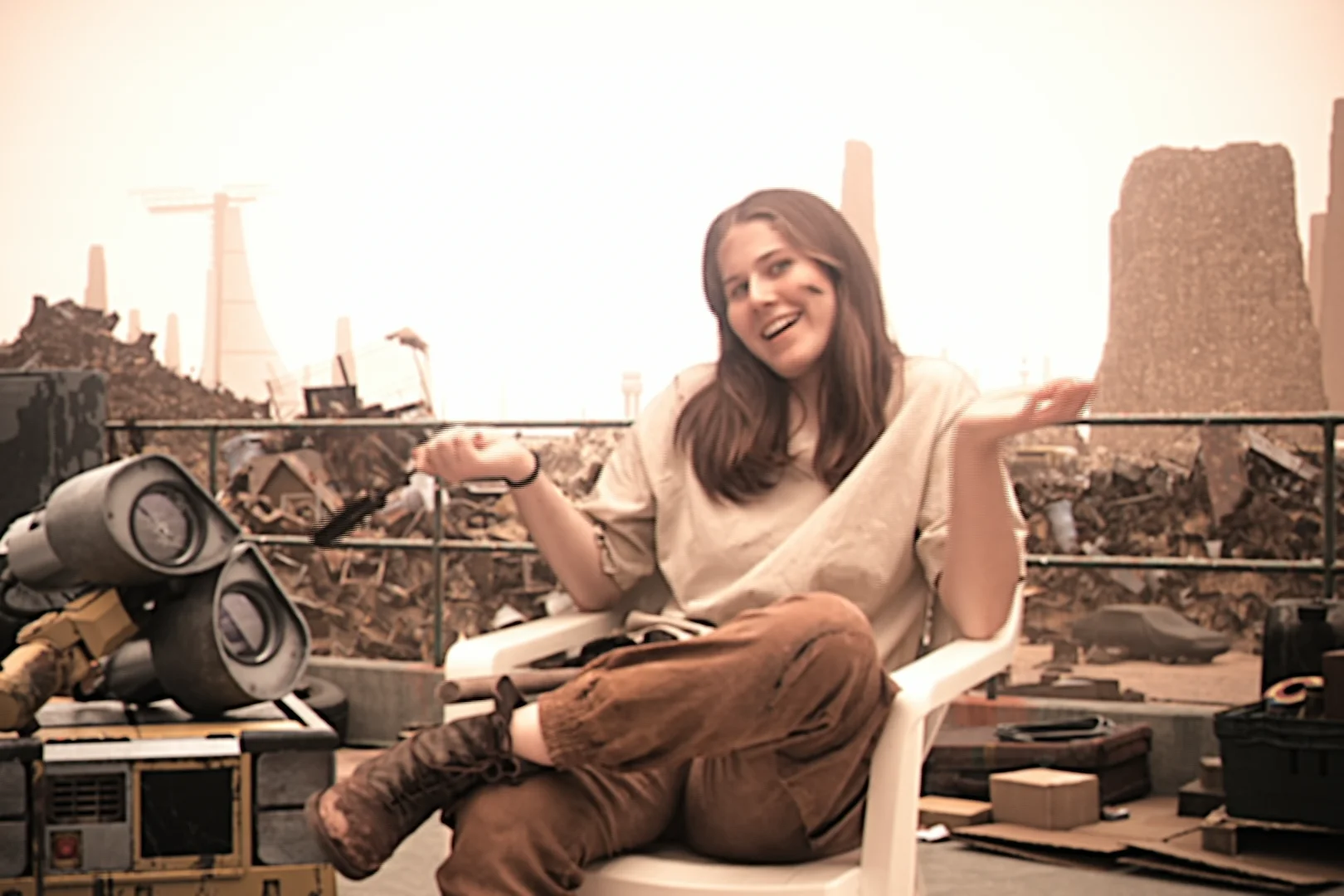
We emulated the warm, sun-bleached brown of the original's Earth sequence. We shot on a Blackmagic 6K, and in post the footage was processed to look older (edge sharpening, interlacing and a near-sepia grade), so it reads like a lo-fi documentary the characters shot themselves.
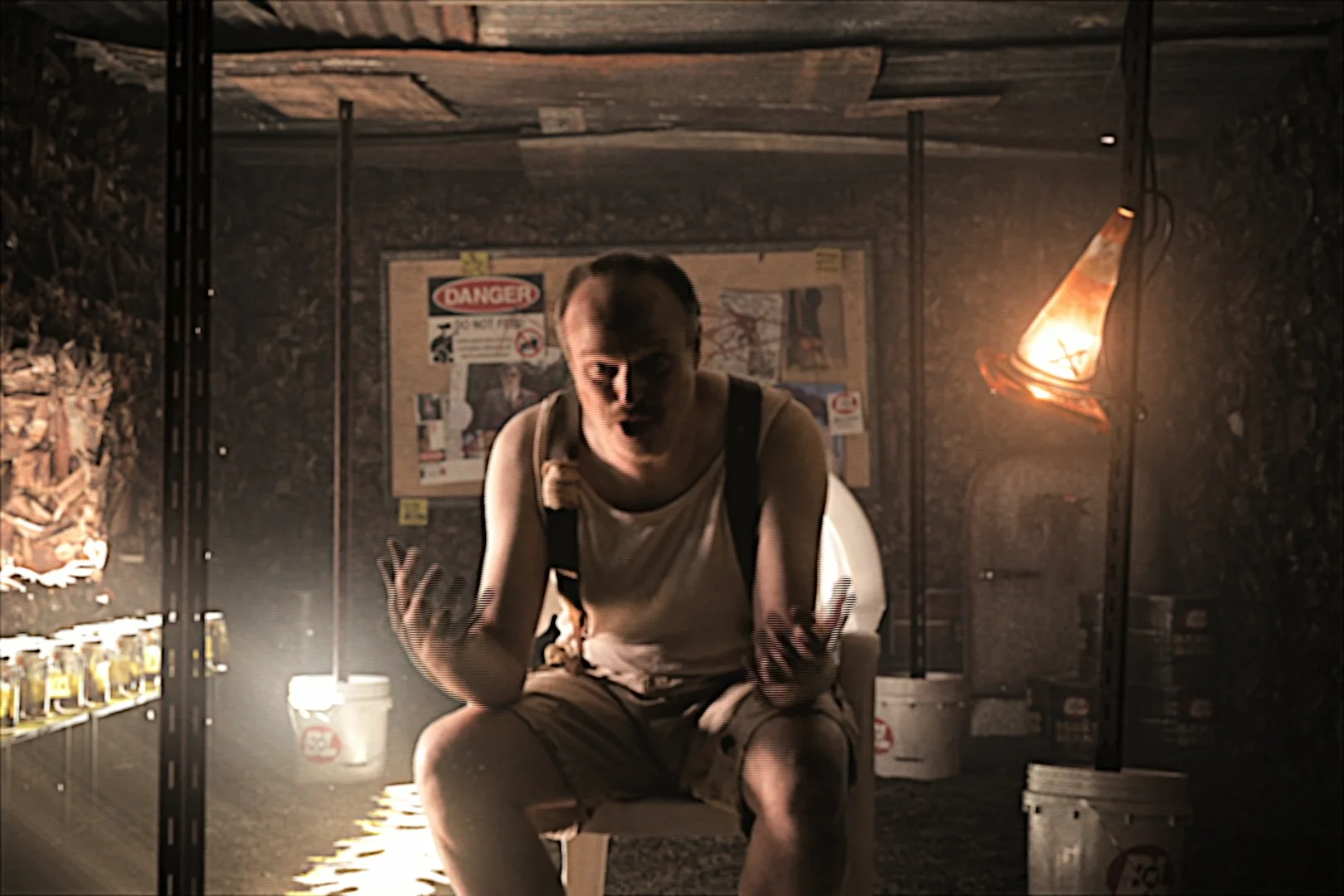
Most of the film plays across two digital sets: an outdoor interview spot in a wasteland of trash piles and towers, and a home built inside one of those towers. The actors were shot on green and blue screen, and Otto Hornback, Tom Kelly and Ann-Kathrin Hempel composited them into the environments in Nuke.
Building the Sets
The environments were laid out in Blender, built in Houdini and rendered in Redshift, whose instancing let us fill large scenes with Megascans assets and trash cubes without running out of memory. Loose detail was scattered procedurally and the distinctive pieces were built by hand.
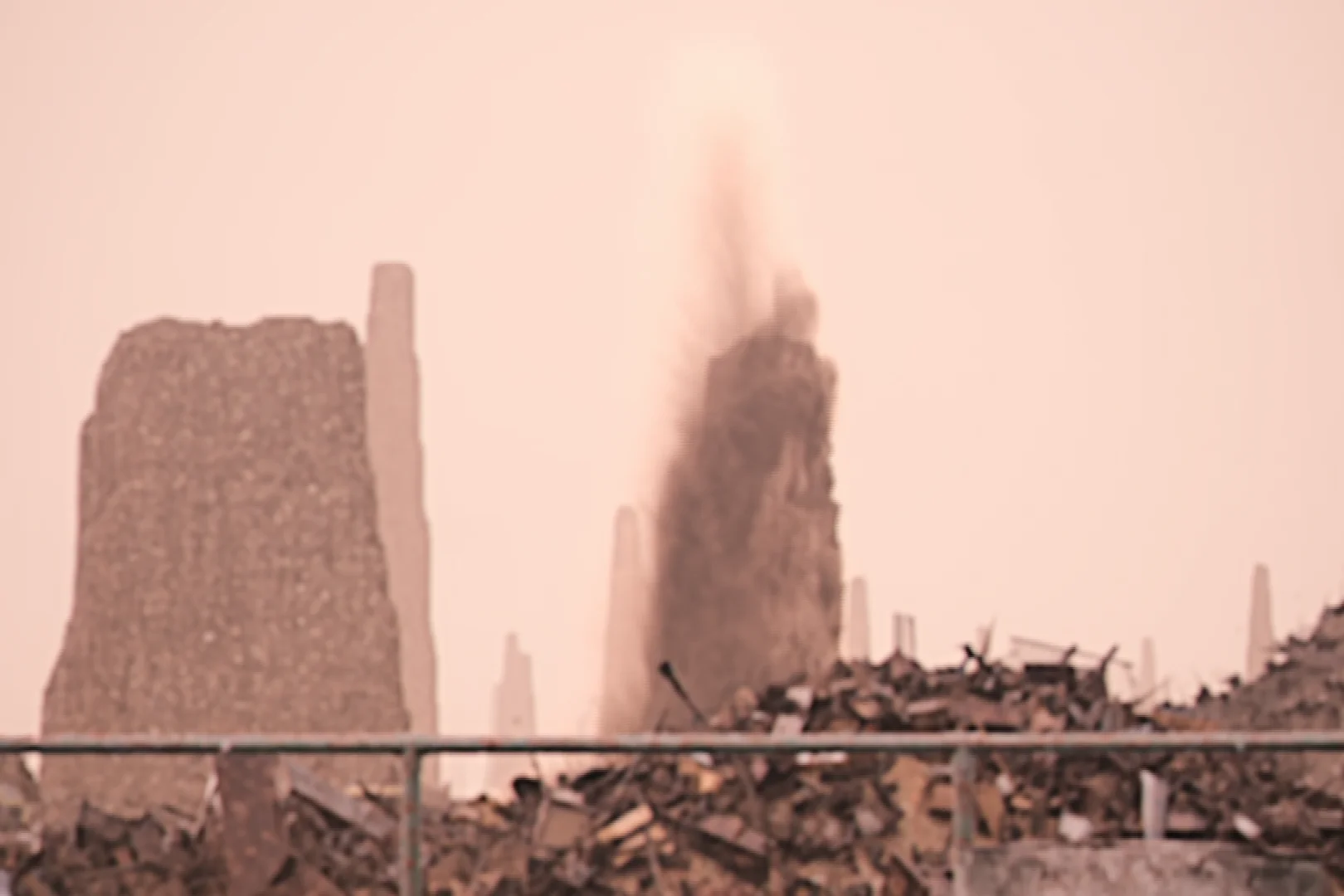
I built the trash cubes Wall·E leaves behind with a Geometry Nodes system that creates a random base shape, scatters debris over it and re-textures the result, so one setup could produce dozens of unique blocks. The towers are another Geometry Nodes setup, driven by a handful of controls for height, sag and density. For the backgrounds, a set of towers was rendered as cards and placed in Nuke, while the hero tower in the finale used Redshift instances for higher fidelity up close.
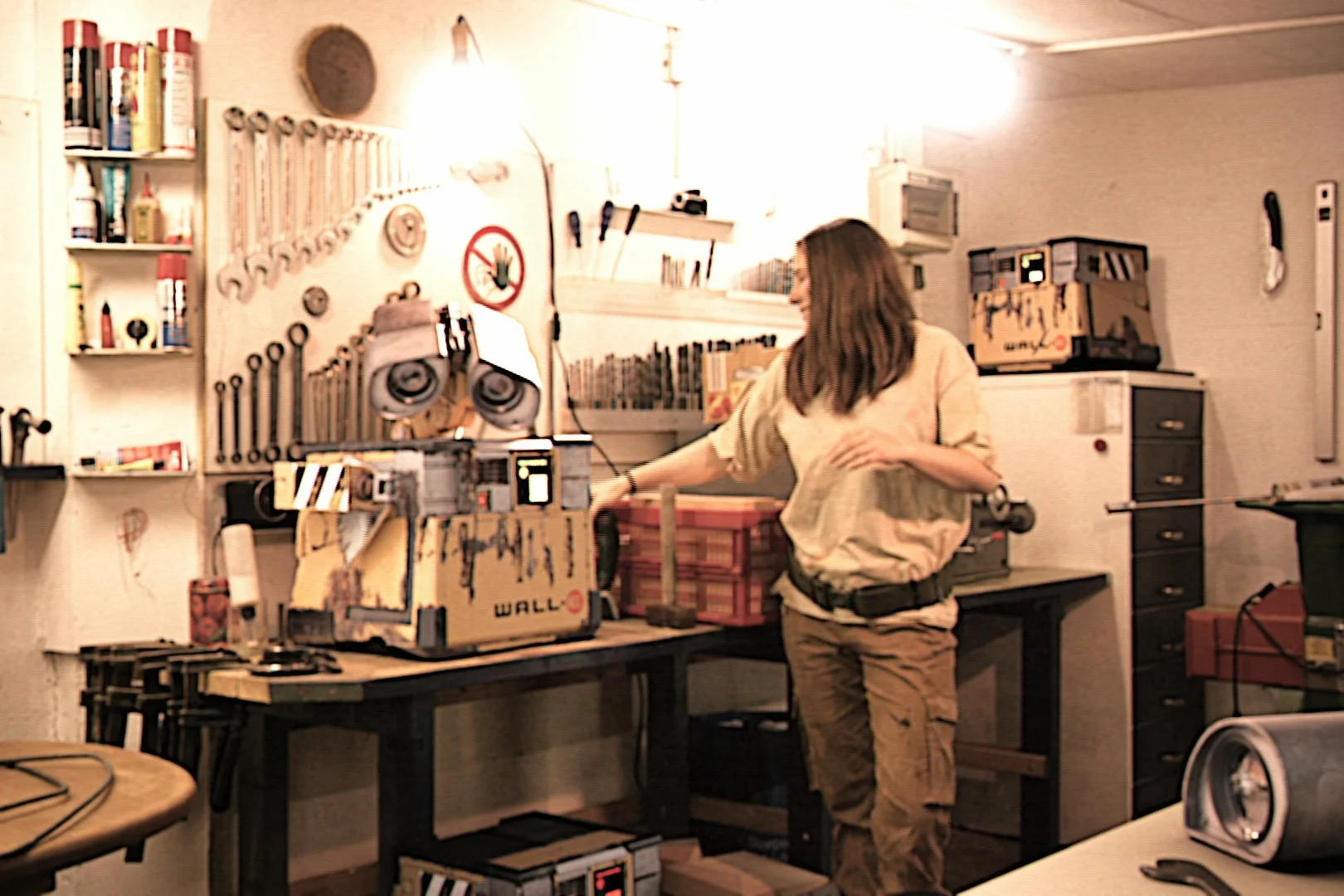
The team built the Wall·E model from scratch and stayed close to the Pixar design, with surfacing by Otto Hornback. My part was the rig and its custom actions, plus some of the character and camera animation, while Maja Neumann did a lot of the animation. The team also built two story variants: one with a camera for an eye, one with a fold-out saw for a hand.
Simulations
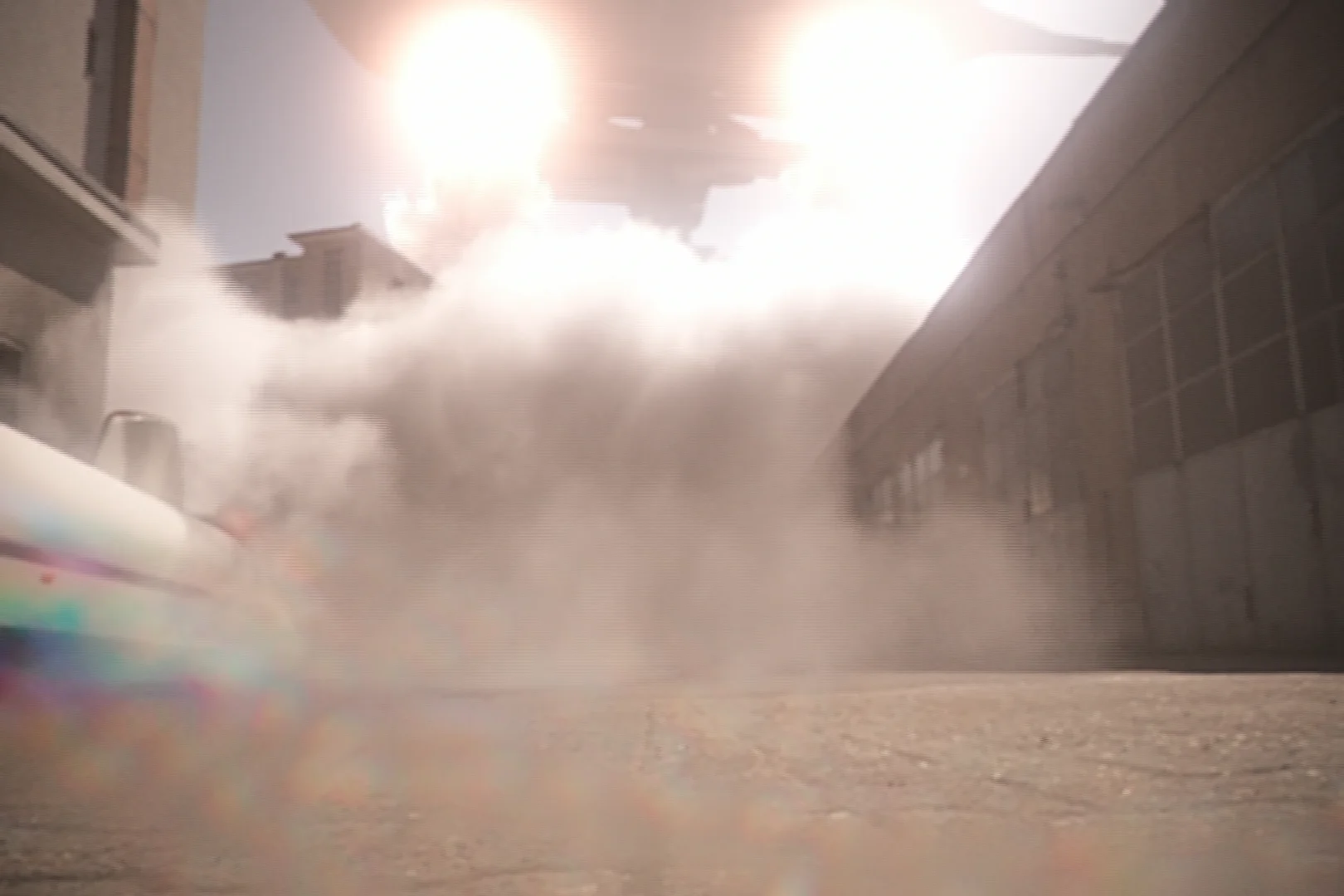
Two big Houdini simulations, both built with the Axiom solver, anchor major scenes of the film. The opener is a spaceship launch, where the dust wave thrown off by the thrusters rolls out and swallows the character and camera. The finale is the tower collapse, a combined rigid-body and smoke simulation that I built.
Production
The trickiest part of the composite was the weather: one actor had to be shot indoors and the other outdoors in direct sun, although their interviews share a set in the film, so matching the two took a lot of grading work.
We finished the final passes after the semester and screened the film at the Werkschau (our school's student showcase) alongside our bachelor projects. The main lesson was to leave more buffer for what you can't control: weather, a busy render farm, and every deadline landing at once. It was also one of the most fun projects I worked on during my degree.